

Do You Really Need Invisalign? Our Advice for People in Katy, TX
At TUTH Dental, we believe everyone deserves a confident, beautiful smile—and clear aligners can help you achieve just that. Our modern, discreet alternative to traditional braces is designed to straighten your teeth comfortably and without interrupting your lifestyle. Serving the Katy, TX community, our skilled dental team is here to guide you through every step of your smile transformation with personalized care and cutting-edge technology.


Do You Really Need Invisalign? Let's Talk It Through Honestly
If you're weighing Invisalign, the honest answer is this: you're likely a good candidate for some form of straightening, but the right tool depends entirely on your bite, your goals, and the health of your mouth.
Invisalign is excellent in the right hands for the right case. What matters is getting a precise, personalized assessment rather than a one-size-fits-all recommendation.
Dr. Taline and the team at TÜTH Dental in Katy put this guide together for people who want to make a fully informed decision before committing to care.
Teeth straightening is a much broader subject than any single aligner brand, so this guide covers the full range of options. And because straightening is often just one part of a complete smile transformation, it's worth exploring our cosmetic dentistry options as well. If you'd prefer to talk through your specific situation in person, we welcome that conversation. Reach out to our Katy office or call us at (281) 717-4928.
What This Guide Covers
Here's the ground we'll cover, so you can jump to what matters most to you:
- Whether straightening is a genuine health need or simply something you'd like to improve
- Why teeth crowd, twist, and shift in adulthood in the first place
- How a dentist actually decides whether your teeth need treatment
- The full menu of straightening options, including ones we don't offer
- What clear aligners can and can't fix
- Which option tends to suit which person
- What shapes the value of custom treatment
- How treatment fits into a busy working life
- Where straightening fits within a broader plan for your smile, from a gentle whitening touch-up to a full smile makeover with Dr. Taline
Do You Really Need to Straighten Your Teeth as an Adult?
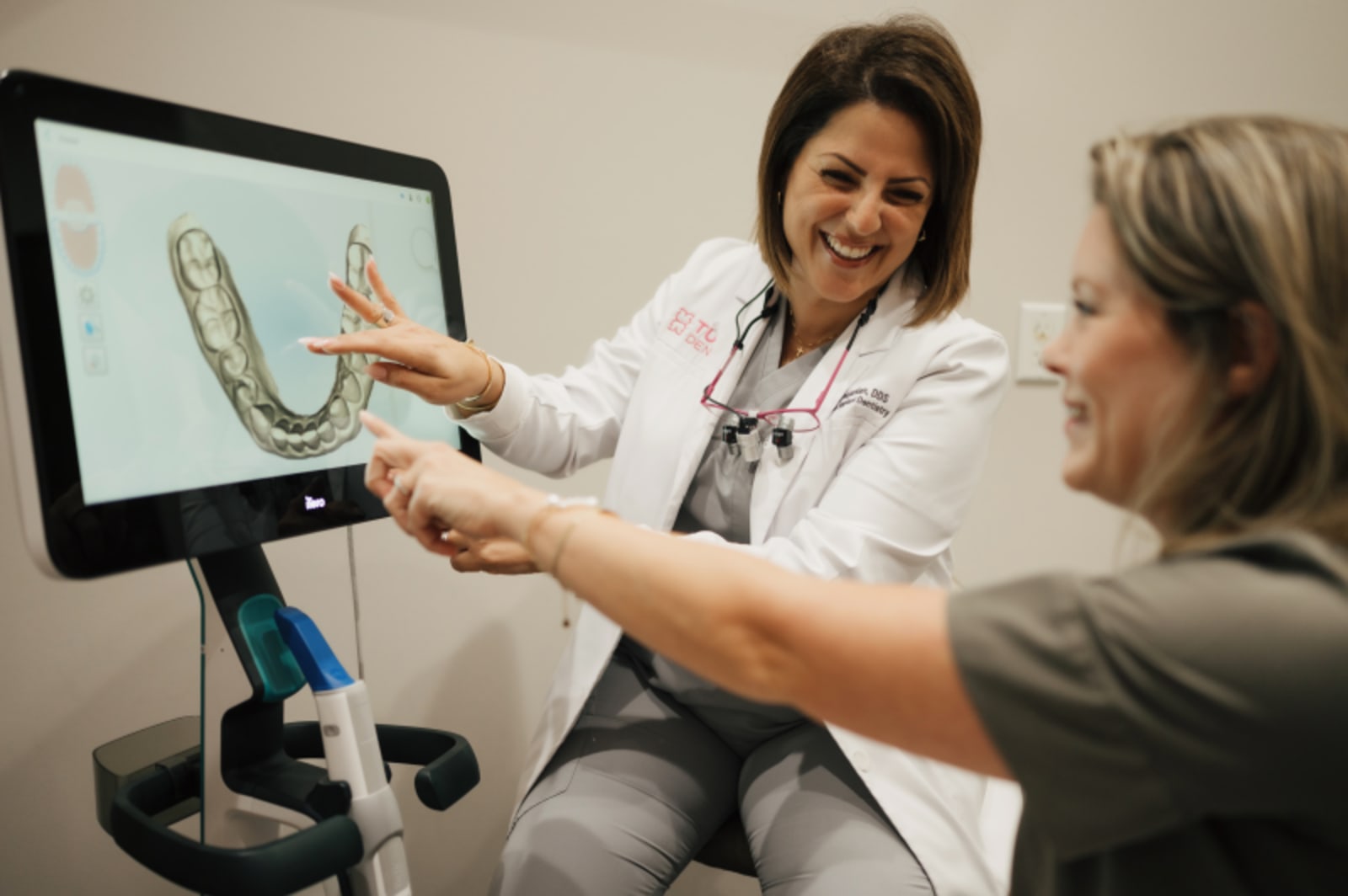
There's a meaningful difference between teeth you'd like to refine and teeth that genuinely need clinical attention. Both are worthy reasons to pursue treatment, but they call for different conversations.
Many of the adults who come to see Dr. Taline have carried a minor imperfection for years. A slight twist, a gap, a bit of crowding that's never caused a problem but has quietly shaped how confident they feel in a boardroom or in photographs. That's a completely legitimate reason to invest in your smile, and Invisalign makes it possible to do so with virtually no disruption to your professional life.
On the clinical side, certain alignment issues do more than affect appearance. Crowded teeth are harder to keep clean, which increases the risk of decay and gum disease over time. An uneven bite can accelerate enamel wear, place stress on the jaw, or gradually compromise a tooth's long-term stability.
In practice, it tends to come down to this:
- If your teeth are healthy and you want to elevate how your smile looks and feels, treatment is a personal choice and an investment in how you present yourself. Many patients fold it into a broader cosmetic plan.
- If misalignment is affecting your oral health or putting a tooth at risk, treatment becomes a clinical priority. Gum health is often part of that picture and addressed in the right sequence.
- If you're somewhere in between, a thorough exam gives you a clear, honest answer.
Dr. Taline will never recommend treatment you don't need. What she will do is give you a complete picture of your options so you can make a confident, informed decision about the smile you want.
What Causes Crooked, Crowded, or Shifting Teeth in Adulthood
A lot of people assume teeth that were fine as a teenager stay that way forever.
They don't.
Teeth drift slowly across a whole lifetime, and a handful of common forces explain why something looks different now.
- Relapse after childhood braces. If you wore braces as a kid and the retainer slipped out of your routine, your teeth have very likely drifted back. This is very common, and with the right clinical oversight, it responds well to treatment with Invisalign for adults.
- Natural forward drift. Teeth tend to migrate forward and inward over the years, which crowds the lower front teeth in particular.
- Bone and gum changes. As the supporting structures change with age, or if gum disease loosens a tooth's grip, teeth can shift, splay, or open up new gaps. Addressing the gums first with periodontal treatment creates a stable foundation before any movement begins.
- Tooth loss or wear. Lose a tooth, or grind teeth down over years, and the neighbors tip and rotate into the space. Replacing a missing tooth with dental implants preserves the integrity of the surrounding teeth and the overall bite.
- Pregnancy and hormonal shifts. Some people notice gum and bite changes around major hormonal events.
Shifting in adulthood is not a sign you did anything wrong. It is simply how mouths behave over decades. What matters is having a provider who understands the full picture and can map a precise, personalized path to the result you want.
How Dentists Figure Out Whether Your Teeth Actually Need Treatment
A real answer to "do I need this?" comes from a thorough clinical exam conducted by a dentist who takes the time to understand your mouth, your goals, and your health history.
The conversation first
Before any scans, we want to understand what's actually bothering you and why. A cosmetic goal and a functional concern lead to very different treatment plans. This is where getting to know you as a person, not just a set of teeth, shapes everything that follows. Dr. Taline approaches every consultation this way because the right plan is always a custom one.
The clinical and bite exam
We examine how your teeth meet, assess any uneven wear, evaluate your gum health, and identify anything moving in a direction that warrants attention. Your bite tells a story that no photograph can capture. If gum concerns are present, we will typically recommend addressing those with periodontal treatment before any movement begins, ensuring your results are built on a stable foundation.
Imaging and scanning
Digital radiography and cone beam imaging reveal what is happening below the gumline with your roots and bone, while an intraoral camera and a digital scan build a precise 3D model of your dentition. Together, they give Dr. Taline a complete picture of whether the bone supporting your teeth is healthy enough for movement and exactly how each tooth would need to travel to achieve the result you are after.
One point worth understanding: healthy bone and gums, not your age, determine whether teeth can be moved safely and predictably. A 45-year-old with excellent gum health is often a more straightforward candidate than a younger patient with underlying concerns. The exam is what separates a confident "you are an excellent candidate" from "let's address something else first so your outcome is everything it should be."
The Full Range of Teeth-Straightening Options
Invisalign is one approach among several. Here is the broader menu, covering the full range of what each option is truly capable of.
Clear aligners (Invisalign and similar systems)
Removable, nearly invisible trays that shift teeth in stages. You take them out to eat and brush. They're the preferred choice for discerning adults because most people won't notice you're wearing them, and in the right hands they handle a wide range of cases with excellent precision.
Success depends on consistent wear and, more importantly, on the skill of the provider planning your treatment. If you're weighing this against other cosmetic paths, our guide on veneers versus Invisalign can help you see which suits your goals.
Metal braces
Brackets and wires fixed to the teeth. Highly versatile, and they can correct complex cases that aligners cannot. The consideration is visibility and the extra care needed to brush around brackets. They remain the most capable all-around tool in orthodontics for involved cases.
Ceramic braces
Same mechanics as metal braces, with tooth-colored or clear brackets that blend in beautifully. A refined option for someone who needs the full corrective capability of braces without the visual prominence.
Lingual braces
Braces mounted on the back of the teeth, completely out of sight. A sophisticated option for patients who want the full corrective power of braces with zero visible hardware. Not every provider offers them, and they require a higher level of clinical expertise to place and manage well.
At-home or mail-order aligners
Direct-to-consumer kits that bypass the in-person clinical exam entirely. Without a dentist personally evaluating your gums, bone, and bite, problems go undetected and teeth can move in ways that cause lasting harm. For anyone serious about the quality and longevity of their results, there is no substitute for hands-on clinical oversight at every stage of treatment.
Surgical orthodontics
For severe cases where the jaws themselves sit out of position, jaw surgery combined with orthodontics may be the only way to fully correct the bite. It's reserved for skeletal problems that aligners or braces alone cannot reach.
No single option is universally superior. The right choice is the one that fits your clinical needs, your lifestyle, and the outcome you're committed to achieving. If you'd like a thorough, unhurried assessment tailored specifically to you, we'd be glad to talk it through with Dr. Taline in Katy.
What Invisalign Actually Fixes, and When You Need Something Else
Clear aligners are a precise, capable tool. Like any precision instrument, they perform best when matched to the right case. Understanding that scope is part of how Dr. Taline ensures every patient gets a result worth having.
Cases that tend to respond well:
- Crowding, where teeth overlap or rotate because the arch is short on space.
- Spacing and gaps, which affect both looks and how the bite functions.
- Mild to moderate bite issues, like an overbite, underbite, crossbite, or open bite that hasn't reached a structural level.
- Orthodontic relapse, the post-braces drift so many adults deal with, and one of the most satisfying cases to correct beautifully.
Where aligners reach their limit: severe skeletal discrepancies, where the jaw itself sits significantly out of position, call for a different path, sometimes braces and sometimes oral surgery. Large vertical bite problems and certain complex rotations can also fall outside what trays alone reliably correct.
The real question is whether your situation calls for aligners or something more involved. That answer comes from a thorough clinical assessment, not a self-diagnosis. A consultation with Dr. Taline is where that picture becomes clear.
If aligners are not the right fit, Dr. Taline will tell you plainly and recommend the approach that will actually deliver the outcome you are looking for. For some patients, that means veneers. For others, a carefully sequenced combination of treatments produces a result that neither option could achieve alone.
Who Each Option Suits Best
- Clear aligners fit best when discretion matters and you'll reliably keep the trays in 20-plus hours a day, provided your case is mild to moderate. One executive who started in her late 30s called it completely worth it, given all the meetings and public speaking her job demanded.
- Ceramic or lingual braces make sense if you need the corrective power of braces but want them less visible. They deliver the full mechanical precision of traditional braces with a more refined appearance during treatment.
- When a case is complex, or your appearance during treatment isn't a priority, metal braces tend to be the answer. They also suit anyone who'd rather not depend on remembering to wear something, since being fixed in place removes compliance as a variable entirely.
- If a jaw misalignment is driving the whole problem and tooth movement alone won't resolve the bite, that's the territory of surgical orthodontics.
- At-home aligners skip the in-person exam entirely, which means no one is checking your bone, gums, or bite before moving your teeth. For anyone who values a precise, well-supervised result, that missing clinical oversight is reason enough to look elsewhere.
Age rarely changes the recommendation. Adults are often easier to treat than teenagers, because they chose this deliberately and follow through. What shapes the right option is your bite and your daily life. If you're weighing your choices, it helps to know whether clear aligners are worth it as an adult, and to compare how tooth movement fits into a wider cosmetic plan. When you're ready, Dr. Taline can walk you through what suits your smile best during a consultation here in Katy.
How to Tell a Skilled Provider From a High-Volume One
Credentials are a starting point, not a guarantee. A top-tier ranking from an aligner company's own program signals one thing: that practice moved a lot of trays. It says nothing about the quality of clinical judgment behind each case. One patient learned this the hard way after choosing a dentist based on impressive veneer results, only to find his aligner skills didn't match.
The aligner brand doesn't do the thinking. The dentist does. For patients who expect a genuinely custom result, here is what separates careful, attentive care from a standardized workflow:
- Who plans your treatment. Is the dentist personally reviewing your scans and mapping every movement, or is your case handed to a templated system? Dr. Taline reviews every case herself.
- How refinements get handled. When teeth aren't tracking as planned, does the provider catch it early and adjust, or wait until you raise a concern?
- How involved the doctor stays. Are your progress visits with the dentist, or are they routinely handed off to an assistant?
- Whether your case is treated as its own puzzle or processed as one of many identical protocols.
A high-volume practice may produce acceptable results on straightforward cases. The difference in quality becomes clear the moment a case requires real clinical thinking. Our approach to cosmetic dentistry is built on direct doctor involvement at every stage and on treating each patient as an individual with a result worth getting exactly right. If you'd like to talk through your options, reach out to our Katy office or call (281) 717-4928.
What the Treatment Process and Timeline Look Like
The consultation
It starts with a real conversation. Dr. Taline takes time to understand what you want to change, how your smile fits into your daily life, and which approach will deliver the result you're looking for. Whether that's Invisalign or another path entirely, the recommendation is built around your specific case. Come with questions. This is exactly the right moment to ask them.
The scan
Using advanced 3D imaging, we map your treatment in precise detail and show you a projection of how your teeth are expected to move. You'll see the plan before a single tray is made.
Starting treatment
Once your custom plan is finalized and your aligners or appliances are ready, you come in for a thorough walkthrough on wearing and caring for them. Ongoing appointments are focused check-ins where Dr. Taline personally confirms your teeth are tracking exactly as planned.
How long it takes
Every case is different, and your timeline will reflect the precision of your treatment plan rather than a one-size-fits-all schedule. After your exam, you'll have a clear, honest picture of what to expect from start to finish. Ready to get started? Reach out to our Katy team and we'll walk you through every step.
Retention and Aftercare: Keeping Your Results for Life
A beautifully straightened smile is a long-term investment, and protecting it deserves the same care and intention that went into creating it. Teeth don't stay put on their own. Without a proper retention plan, the same natural forces that caused the original shifting will gradually work against your results over time.
Retainers are what hold everything in place while the bone fully stabilizes around your newly positioned teeth. Depending on your case, Dr. Taline may recommend a removable retainer worn on a schedule, or a discreet fixed wire bonded behind the teeth. Your aftercare plan is tailored specifically to your treatment and your lifestyle, not a one-size-fits-all protocol.
Retention is a lifelong commitment to the smile you worked for. Most patients settle into wearing a removable retainer at night, and it becomes second nature quickly. The patients who enjoy lasting, beautiful results are the ones who treat retention as part of their standard of care. If you are ready to protect a smile you love, schedule a visit with Dr. Taline in Katy and we will build the plan around you.
What Adult Teeth Straightening Costs and How People in Katy Pay for It

Straightening is a custom service, and what you invest reflects the scope and precision of the work involved.
What shapes the investment:
- The treatment you choose. Clear aligners, traditional braces, lingual braces, and surgical cases each carry different levels of clinical involvement, and the investment reflects that.
- Case complexity. A straightforward refinement is a different undertaking than correcting a bite that has developed over decades. The detail and precision required drive the scope of care.
- Treatment length. More movement means more stages, more clinical oversight, and more of Dr. Taline's direct involvement throughout.
Any number quoted without a thorough exam behind it is speculation. After your consultation, you'll receive a precise, itemized picture of what your specific case involves, with nothing left vague.
How patients typically structure the investment:
- Fee-for-service care. TUTH Dental is a fee-for-service practice. That means your treatment plan is built entirely around what's right for your smile, with no compromises driven by insurance limitations. If you carry orthodontic benefits, we'll help you understand how they apply.
- FSA and HSA accounts. Orthodontic treatment qualifies as an eligible expense under most flexible and health savings accounts, allowing you to apply pre-tax dollars toward your care.
- Structured payment arrangements. For patients who prefer to distribute the investment over time, that option is available without compromising the quality or scope of your treatment plan.
Fitting Treatment Into a Busy Adult Life
Most of our patients are professionals with full schedules, and treatment is designed to work around that. There is a brief adjustment period with aligners. For the first week or two you will notice the trays, perhaps a slight lisp, and the rhythm of removing them at meals. That becomes second nature quickly. Braces have their own short learning curve, mostly around brushing technique and a few foods to avoid.
Beyond that initial stretch, treatment integrates into a demanding schedule more smoothly than most people anticipate:
- Progress appointments are efficient check-ins with Dr. Taline, not drawn-out visits. Our Katy office is open weekdays from 9 to 6, so scheduling around your calendar is straightforward.
- With aligners, there are no dietary restrictions. You remove them at mealtimes and carry on as usual.
- Frequent travel is no obstacle. You bring your next sets with you and switch on schedule, wherever you are.
- Presenting and speaking at work is rarely an issue for long. Most patients stop noticing the trays within a couple of weeks, and colleagues rarely do at all.
Patients who lead full, public-facing lives consistently tell us treatment fit their routine far more seamlessly than they expected. If you are ready to explore your options, learn more about aligner treatment or meet Dr. Taline.
When Straightening Is Part of a Bigger Picture
Sometimes straightening is the whole project. Often it's one carefully considered piece of something broader, and getting the sequence right is what separates a good result from a truly exceptional one.
- Gum health comes first. Moving teeth through inflamed or diseased gums compromises the quality of your outcome. Active gum disease needs to be fully resolved before any movement begins, giving your teeth a stable, healthy foundation to move through. Our periodontal care ensures that foundation is solid before treatment begins.
- Existing dental work matters. Decay, failing fillings, or worn restorations are addressed in the right sequence, because moving teeth around unresolved problems undermines the integrity of the final result.
- Whitening and veneers come after, not before. If a beautifully refined smile is the goal, straightening happens first, then veneers or whitening complete the look. That sequence protects the quality and longevity of your cosmetic work.
- Custom combination plans. For many patients, pairing alignment with restorative or cosmetic care delivers results that neither approach could achieve alone. Dr. Taline maps this out as a single, cohesive plan tailored to your smile. This is often the foundation of a full smile makeover.
The patients who are most delighted with their results are the ones who began with a thorough, honest assessment of their whole mouth and a clear, expertly sequenced plan to get where they wanted to go.
Ready to Find Out What's Right for You? Talk It Through With Our Katy Team

The real question was never just "Invisalign or not." It's what your specific teeth need, which option genuinely serves your goals, and what a thoughtful, custom plan looks like for you. The way to answer that is a real conversation with a dentist who takes the time to get it right.
A consultation with Dr. Taline at TÜTH Dental is a thorough, unhurried look at your mouth and your goals. She'll examine your teeth, listen carefully to what you want to change, and give you an honest, personalized recommendation. If a different approach serves you better than aligners, you'll hear that clearly and why.
For some patients that conversation leads to clear aligners; for others, a more tailored path like veneers turns out to be the right answer. And for many, a full smile makeover brings several of these options together into one carefully sequenced plan built around the result you actually want.
We're at 2020 S Fry Rd, Suite I in Katy, Monday through Friday. When you're ready to invest in your smile, call us at (281) 717-4928 and we'll help you determine the right path forward.
Connect
We look forward to welcoming you.
Contact us today at 281-717-4928 to schedule an appointment.